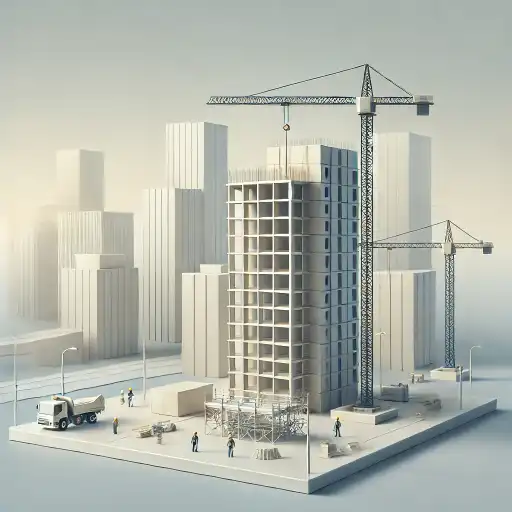
Understanding commercial building costs per square metre in Australia is crucial for anyone involved in construction, whether you’re a developer, investor, or builder. Knowing the costs upfront helps with budgeting, prevents unexpected expenses, and ensures a project runs smoothly.
Accurate cost estimation is essential for financial planning, avoiding delays, and making informed decisions. Developers and investors rely on these estimates to assess project feasibility, while builders and contractors need up-to-date figures on materials and labour costs. Quantity surveyors and cost estimators also use these benchmarks to provide accurate pricing for clients.
This guide breaks down the latest commercial construction costs in 2026, covering key cost factors such as location, materials, and labour. It also explores strategies to reduce expenses without compromising quality and offers insights into best practices for accurate cost estimation. With prices fluctuating due to market trends and regulatory changes, having a clear cost breakdown is essential for effective planning.
Factors Affecting Commercial Building Cost Per Square Metre in Australia
Estimating the commercial building cost per square metre in Australia requires an understanding of the factors that influence pricing. Costs vary significantly based on location, building type, materials, and labour availability. Developers and builders must consider these elements to create an accurate budget and avoid unexpected expenses. Below are the key factors affecting commercial construction costs in 2026.
Location & Regional Construction Cost Differences in Australia
The location of a commercial project significantly impacts construction costs. Sydney and Melbourne generally have higher building costs due to increased demand, higher wages, and expensive materials. Brisbane, Perth, and Adelaide offer more competitive pricing, but factors such as project size and complexity still play a role in overall costs.
Regional areas tend to have lower construction costs per square metre, but logistical challenges such as material transportation and limited labour availability can drive up expenses. Developers must assess these regional differences when budgeting for commercial construction projects.
How Building Type Affects Commercial Construction Costs
The type of commercial building being constructed plays a major role in determining costs per square metre. Each type of property has specific requirements that impact material, labour, and regulatory costs.
Here’s an approximate cost breakdown for different commercial building types in Australia:
- Office Buildings – $2,500 – $5,000 per m²
- Retail Spaces – $1,800 – $4,500 per m²
- Industrial Warehouses – $1,300 – $2,800 per m²
- Healthcare Facilities – $3,000 – $6,500 per m²
For instance, office buildings require extensive electrical and mechanical systems, making them more expensive than industrial warehouses, which focus primarily on structural integrity. Retail spaces may require specialized interior designs, while healthcare facilities must meet strict regulatory standards, further driving up costs.
How Material Selection Impacts Commercial Building Costs in Australia
Materials are a major component of commercial building costs per square metre. Basic materials such as concrete, steel, and timber vary in price based on global supply chain fluctuations, demand, and location. Developers must carefully choose materials that align with both budget constraints and project requirements.
- Basic construction materials: Cost-effective but limited in durability.
- Premium finishes: Higher cost but improve long-term value and aesthetics.
- Sustainable and energy-efficient materials: Higher upfront costs but reduce long-term energy consumption.
Choosing cost-effective yet durable materials can significantly lower commercial construction costs without compromising structural integrity.
Labour & Compliance Costs in Commercial Construction
Labour is one of the biggest cost factors in commercial construction projects. The shortage of skilled workers in Australia has driven wages higher, particularly in high-demand cities. Construction labour costs per square metre are directly impacted by the number of workers required, project timeline, and experience level.
Compliance with Australian construction regulations is another key cost factor. Meeting National Construction Code (NCC) requirements, fire safety standards, and energy efficiency guidelines adds to overall expenses. While compliance is necessary, proper planning can help developers manage these costs efficiently.
Average Commercial Building Cost Per Square Metre in Australia
Understanding the commercial building cost per square metre in Australia requires an analysis of current market trends and construction benchmarks. Costs fluctuate based on factors such as location, project type, material pricing, and labour expenses. In 2026, rising material costs and skilled labour shortages continue to impact construction budgets, making it crucial for developers to stay informed on cost estimates.
Commercial Construction Cost Estimates by Building Type
The following table provides an approximate cost range for commercial construction projects in Australia, depending on the building type and level of finish:
| Building Type | Low-Cost Estimate (per m²) | High-Cost Estimate (per m²) |
|---|---|---|
| Office Buildings | $2,500 | $5,000 |
| Retail Spaces | $1,800 | $4,500 |
| Industrial Warehouses | $1,300 | $2,800 |
| Healthcare Facilities | $3,000 | $6,500 |
| Hospitality (Hotels) | $3,500 | $7,000 |
These figures depend on factors such as location, design complexity, and material selection. Office buildings and healthcare facilities often have the highest commercial construction costs per square metre due to specialized infrastructure and compliance requirements, while industrial warehouses are generally more cost-effective due to simpler structural needs.
Need accurate commercial construction costs for your project?
Our estimators will give you a detailed line-by-line breakdown priced like a builder.
Get a Commercial Estimate →Construction Cost Variations Across Australian Cities
The location of a commercial building project is a major factor in determining cost per square metre. Below is a city-based comparison of average commercial construction costs:
- Sydney & Melbourne – Highest costs due to high demand, skilled labour shortages, and material pricing.
- Brisbane & Perth – Moderate costs with slightly lower labour expenses but fluctuating material availability.
- Adelaide & Regional Areas – Generally lower costs, but transport logistics and labour availability can impact pricing.
For example, a mid-range office building in Sydney may cost around $4,500 per square metre, while the same project in Adelaide could be completed for $3,200 per square metre. Developers should consider these regional differences when budgeting.
Cost Breakdown of a Commercial Building Project
To provide a clearer picture of commercial building costs in Australia, here’s a typical cost breakdown for a 1,000m² mid-range office development:
- Base Construction Costs – $2.8M ($2,800 per m²)
- Interior Fit-Out & Finishes – $1.2M ($1,200 per m²)
- Regulatory & Compliance Fees – $500K ($500 per m²)
- Total Estimated Cost – $4.5M ($4,500 per m²)
This breakdown highlights the importance of accounting for not just base construction expenses but also interior and compliance costs when estimating a project budget.
Trends Affecting Commercial Building Costs in 2026
Several industry trends are shaping commercial construction costs per square metre in 2026:
- Labour Shortages – A rising demand for skilled trades is increasing hourly wages.
- Material Price Inflation – Supply chain disruptions are causing fluctuations in steel, timber, and concrete prices.
- Sustainability & Compliance Costs – Stricter environmental laws are pushing developers to invest in energy-efficient solutions.
- “According to the latest Australian Building Cost Index, material prices and labour costs have significantly fluctuated over the past year.”
Methods for Estimating Commercial Building Costs in Australia
Accurately estimating the commercial building cost per square metre in Australia is essential for budgeting and project planning. Developers, builders, and investors rely on cost estimations to prevent financial overruns and ensure their projects remain profitable. There are several approaches to calculating construction costs, ranging from professional cost estimators to advanced software tools.
The Role of Cost Estimators & Quantity Surveyors
Professional cost estimators and quantity surveyors play a crucial role in commercial construction cost estimation. Their expertise ensures that all labour, material, and compliance costs are accurately accounted for.
Why Hire a Cost Estimator?
- Provides accurate project budgeting based on real-world data.
- Identifies potential cost-saving opportunities.
- Ensures compliance with Australian construction regulations.
- Reduces the risk of budget overruns and financial miscalculations.
An experienced construction estimator uses historical data, market trends, and detailed quantity takeoffs to estimate costs precisely. This is particularly valuable for large-scale commercial projects, where small miscalculations can lead to significant financial losses.
“Cost estimates should follow industry-standard guidelines to ensure commercial project budgets are accurate and realistic”
Cost Estimation Software & Tools for Commercial Construction
Advancements in technology have introduced cost estimation software that helps professionals calculate commercial building costs per square metre more efficiently. Some of the most widely used tools include:
- Buildsoft – Commonly used for detailed cost breakdowns and material pricing.
- CostX – Offers advanced 3D takeoff capabilities for precise quantity surveying.
- Rawlinsons Cost Guide – Provides benchmark costs for commercial buildings across Australia.
- Online Construction Cost Calculators – Useful for quick residential estimates — try our cost of building a house calculator — but they lack the accuracy needed for large-scale commercial projects.
While these tools enhance efficiency, they should be used alongside professional expertise to ensure accuracy in construction budgeting.
Breakdown of a Commercial Office Fit-Out Cost Estimate
A detailed cost estimation process typically includes the following:
- Preliminary Budgeting – Establishing an initial cost estimate based on project size, location, and complexity.
- Detailed Quantity Takeoff – Listing all required materials, labour, and services with precise measurements.
- Contingency Planning – Accounting for potential cost fluctuations and unexpected expenses.
- Final Cost Review – Adjusting figures based on market trends and supplier pricing updates.
Example: 1,000m² Mid-Range Office Fit-Out Cost Breakdown
- Base Construction Costs – $2.8M ($2,800 per m²)
- Interior Finishes & Fit-Out – $1.2M ($1,200 per m²)
- Compliance & Permit Costs – $500K ($500 per m²)
- Total Estimated Cost – $4.5M ($4,500 per m²)
This structured approach ensures an accurate commercial construction cost estimate, helping developers avoid costly miscalculations. A Bill of Quantities (BOQ) is essential for detailed cost estimation, helping developers itemize materials, labour, and overhead costs.
Common Pitfalls in Commercial Cost Estimation
Even with professional estimations, errors can occur. Some common mistakes in estimating commercial building costs per square metre include:
- Ignoring Market Fluctuations – Material and labour costs can change rapidly.
- Underestimating Compliance Costs – Regulatory approvals and permits can add unexpected expenses.
- Overlooking Hidden Costs – Site preparation, demolition, and infrastructure fees must be factored in.
- Failing to Adjust for Inflation – Construction costs in Australia have been steadily rising, making outdated estimates unreliable.
Developers can minimize these risks by working with experienced cost estimators and using up-to-date construction cost data.
Cost-Saving Strategies for Commercial Construction in Australia
Reducing commercial building costs per square metre in Australia without compromising quality is a key concern for developers and investors. With rising material and labour expenses, implementing strategic cost-saving measures can help keep construction budgets under control. Below are effective ways to optimize costs while maintaining construction standards.
Value Engineering in Commercial Construction
Value engineering is a systematic approach to reducing costs without compromising functionality or quality. By reassessing design elements and materials, developers can optimize spending while maintaining project integrity.
How Value Engineering Helps Reduce Commercial Building Costs:
- Identifies alternative materials that offer durability at a lower price.
- Eliminates non-essential design elements to cut unnecessary expenses.
- Optimizes building layouts to reduce wasted space and construction complexity.
- Improves energy efficiency, leading to long-term cost savings on utilities.
For example, using precast concrete panels instead of traditional masonry can cut labour and material costs, while selecting LED lighting and energy-efficient HVAC systems lowers long-term operational expenses.
Bulk Purchasing & Supplier Negotiations
Material costs are a major component of commercial construction expenses, and bulk purchasing can lead to significant savings. By ordering construction materials in large quantities, developers can negotiate discounted rates and minimize delivery costs.
Best Practices for Cost Reduction Through Supplier Negotiation:
- Establish long-term contracts with reliable suppliers for better pricing.
- Compare multiple vendors to secure competitive bulk discounts.
- Source materials locally to avoid high transportation costs.
- Buy in advance to hedge against price fluctuations in the materials market.
Many contractors partner with national suppliers or wholesalers to access volume-based discounts, particularly for steel, concrete, timber, and insulation materials.
Smart Scheduling & Labour Efficiency
Labour costs account for a large portion of commercial construction expenses, making efficient scheduling essential for cost control. Poor planning can lead to delays, overtime costs, and budget overruns.
Ways to Optimize Labour Costs in Commercial Construction:
- Use project management software to streamline timelines and workforce allocation.
- Avoid peak-season construction to reduce overtime pay and worker shortages.
- Cross-train employees for greater flexibility in workforce deployment.
- Implement prefabrication techniques to reduce on-site labour time.
For example, prefabricated wall panels and modular systems can speed up construction timelines, reducing labour dependency and overall costs.
Government Incentives & Tax Benefits for Commercial Construction
The Australian government offers various grants, rebates, and tax incentives to encourage sustainable and cost-effective construction. Taking advantage of these programs can lead to significant financial savings for developers.
Key Construction Incentives in Australia:
- Green Building Grants – Funding for commercial projects that meet energy efficiency and sustainability standards.
- R&D Tax Incentives – Tax reductions for companies investing in innovative building technologies.
- Depreciation Tax Benefits – Businesses can claim deductions on construction assets and equipment over time.
- Energy Efficiency Rebates – Incentives for installing solar panels, efficient HVAC systems, and LED lighting.
Developers who incorporate energy-efficient systems may qualify for government grants and sustainability incentives that lower long-term operational costs.
Minimizing Unforeseen Costs in Commercial Projects
Unexpected costs can quickly derail a construction budget. Planning for contingencies helps prevent financial strain due to unforeseen expenses.
Ways to Minimize Unanticipated Costs:
- Conduct thorough site analysis before construction to avoid soil and foundation issues.
- Set aside a 5-10% contingency fund for emergency expenses.
- Regularly review and adjust budget forecasts as project conditions change.
- Use detailed contract agreements with contractors to prevent hidden fees.
By incorporating these cost-saving strategies, developers can better manage commercial building costs per square metre in Australia, ensuring financial stability while delivering high-quality projects.
FAQs on Commercial Building Costs in Australia
Understanding the commercial building cost per square metre in Australia can be complex, with many factors affecting pricing. Below are some of the most common questions developers, investors, and builders ask when planning a commercial project.
What’s the Difference Between Hard and Soft Costs in Commercial Construction?
Understanding the distinction between hard and soft costs is crucial for budgeting:
- Hard Costs – Physical construction expenses, including materials, labour, and equipment.
- Soft Costs – Non-physical expenses, such as permit fees, design costs, and financing charges.
For example, the cost of concrete foundations is a hard cost, while an architect’s design fee falls under soft costs. Both contribute to the overall commercial building cost per square metre.
How Do Inflation and Market Trends Impact Commercial Construction Costs?
Inflation and economic factors can cause fluctuations in commercial construction pricing. Key trends affecting cost per square metre include:
- Labour shortages – Increasing wages due to high demand for skilled workers.
- Material price inflation – Rising costs of steel, timber, and concrete due to supply chain disruptions.
- Regulatory changes – Stricter compliance requirements can increase construction expenses.
Tracking market trends and securing supplier contracts early can help developers mitigate cost increases.
Are There Cost Differences Between Private and Public Sector Commercial Projects?
Yes, public sector projects often involve:
- Stricter regulations and compliance standards, increasing administrative costs.
- Longer approval processes, impacting construction timelines.
- Government funding incentives, which can offset expenses.
Private sector developments, on the other hand, tend to have more flexibility in design and budgeting, allowing for cost-saving decisions without excessive regulatory constraints.
What Hidden Costs Should Be Considered in Commercial Construction?
In addition to standard construction expenses, developers should account for hidden costs such as:
- Site preparation & excavation – Unexpected groundwork costs due to soil conditions.
- Legal & permit fees – Regulatory approvals, environmental assessments, and compliance costs.
- Insurance & warranties – Protecting against construction defects and liability issues.
- Project delays – Weather disruptions, supplier shortages, and contract disputes.
Accounting for these factors ensures a realistic commercial building budget, reducing the risk of financial overruns.
Final Thoughts
Estimating the commercial building cost per square metre in Australia is essential for developers, investors, and builders looking to plan and execute projects effectively. With costs influenced by location, building type, material selection, labour expenses, and compliance requirements, having an accurate estimate ensures proper budgeting and minimizes financial risks.
In 2026, rising labour wages, material price fluctuations, and stricter regulatory standards continue to shape the construction industry. Developers must stay informed about market trends and leverage cost-saving strategies such as value engineering, bulk purchasing, and efficient project scheduling to optimize expenses.
Hiring a professional cost estimator or quantity surveyor can provide precise calculations and help navigate challenges such as inflation, unforeseen costs, and legal compliance. Additionally, utilizing cost estimation software and maintaining a contingency budget can further improve financial planning.
For any commercial construction project, understanding hard and soft costs, government incentives, and potential hidden expenses is critical to maintaining profitability and ensuring project success.
By applying the insights from this guide, developers can make data-driven decisions, manage commercial building costs efficiently, and build high-quality projects without overspending.
Talk to an Expert
Are you planning a commercial construction project and need accurate cost estimates? Our team of expert cost estimators is ready to help you navigate pricing, budgeting, and financial planning for your next development.
Ready for accurate commercial cost estimates?
Our experienced estimators have priced commercial projects across Australia. Get a detailed line-by-line breakdown for your development.
Get a Commercial Estimate →